Is eBay safe? How the platform protects buyers and sellers


eBay is a well-established online marketplace with built-in protections designed to support buyers and sellers. However, like most platforms with global reach, its popularity might make it a target for fraudsters, counterfeit sellers, and payment-related scams.
Most eBay transactions proceed without issue, particularly when users follow platform rules and use supported payment methods. Issues are more likely to arise when interactions move outside standard processes or users bypass safeguards.
In this guide, we explain how safety works on eBay, outline the protections available to buyers and sellers, and discuss where the most significant risks come from.
How safe is eBay as a marketplace?
eBay operates as a third-party marketplace that connects independent sellers with buyers. This business model means you're not buying from eBay itself but from third-party vendors who list their items on the platform.
While eBay provides the infrastructure and sets guidelines for transactions, the quality and reliability of your experience largely depend on individual sellers.
The platform is generally safe for online shopping when you follow its recommended practices. On top of that, eBay implements multiple layers of protection, including seller identity confirmation, secure payment processing, and a comprehensive money-back guarantee program. These safeguards help prevent fraud and give users recourse when transactions go wrong.
That said, scams and problematic transactions do occur. Because eBay hosts millions of independent sellers, not all of them operate with the same standards.
Is eBay safe for buyers?
Buying on eBay is generally safe, especially when purchases stay within the platform’s rules and payment systems. The platform offers several types of protection for buyers, including dispute mediation and systems designed to help identify suspicious listings or account activity.
Buyer protections on eBay
The most important buyer protection on eBay is the money-back guarantee, which applies when an item doesn’t arrive, arrives damaged, or is significantly different from the listing description. In these cases, buyers can open a dispute and request a refund or replacement through eBay’s resolution process.
eBay's money-back guarantee covers most items purchased on the platform, with some exceptions for vehicles, real estate, and certain business equipment.
eBay also offers payment protection for payments made through its approved checkout system. For example, when you use eBay's managed payments system, your financial information is encrypted. This means sellers can’t view your credit card details directly.
The platform offers purchase tracking and communication tools, too, that keep all transaction details in one place. This documentation is valuable evidence if you need to file a claim or dispute a transaction.
Finally, buyers can leave feedback and ratings, which helps the community identify reliable sellers and warns others about problematic vendors.
Where buyer risk actually comes from
The risk to buyers on eBay typically doesn’t come from the platform itself. Some sellers might misrepresent items in their listings, use misleading photos, or fail to disclose important details about an item's condition. While eBay's seller policies prohibit this behavior, it can still happen, and you may not discover the problem until after purchase.
Risk also increases when buyers ignore seller feedback, rush through listings, or agree to communicate or pay outside eBay. When buyers agree to move payments or conversations outside the platform, key transaction details may no longer be available through eBay, which can limit the protections that apply.
Is eBay safe for sellers?
Selling on eBay is generally safe, but it comes with a different set of risks compared to buying. eBay provides seller protections and structured dispute processes, yet sellers remain responsible for managing returns, handling claims, and meeting platform requirements.
Seller protections and safeguards
eBay offers protections designed to support sellers when transactions are completed according to its rules. The seller protection program covers eligible transactions against certain buyer claims, including items not received when the seller has proof of delivery.
Orders paid through eBay’s checkout system are tracked within the platform, which helps verify payment status and delivery. In disputes, eBay reviews transaction data and tracking information before making a decision.
For items with a total order value below $750, protections generally apply when the item is shipped on time, and reliable tracking confirms delivery to the buyer’s address provided at checkout. If a seller ships to a different address at the buyer’s request, such as one shared through messages, the transaction may fall outside the scope of available protections.
For orders valued at $750 or more, eBay requires signature confirmation as part of its proof-of-delivery requirements. Without signature confirmation, sellers may have limited options if a delivery-related dispute arises, even when tracking shows the item was delivered.
Where sellers face the most risk
The most concerning risk for sellers involves chargebacks and return fraud. Even when you've shipped an item exactly as described, buyers can file "item not as described" claims. Some dishonest buyers exploit this by returning different items, damaged goods, or nothing at all.
To reduce risk, sellers can document items thoroughly before shipping. This may include photographing the item, recording serial numbers, and documenting packaging and condition. If a dispute arises, this information can be shared with eBay to help support the seller’s position during the review.
Fraudulent buyer claims also pose risks for sellers. Some buyers may falsely claim items never arrived, even with proof of delivery, or file unauthorized transaction claims after receiving products. While seller protection exists, navigating these disputes is time-consuming, and outcomes aren't always favorable.
How eBay protects users on the platform
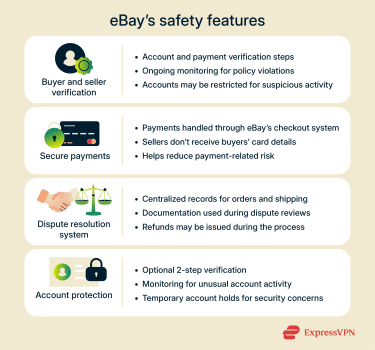 eBay has several protections in addition to the money-back guarantee, designed to support buyers and sellers during marketplace transactions. These protections are most effective when users follow eBay’s rules and complete all steps within its systems.
Below are the core safety features to be aware of.
Buyer and seller verification
eBay’s verification system operates at multiple levels. The first one is the initial account verification, which requires email and phone verification for most users.
eBay then places restrictions on the number and value of items that new sellers can list until they establish a transaction history. This is meant to prevent scammers from creating accounts and immediately listing high-value items they never intend to deliver.
There’s also payment verification, which requires sellers to provide bank account information, tax identification, and business details (for commercial sellers). This creates accountability, making hit-and-run scams more difficult.
Performance monitoring acts as another layer of verification. eBay continuously evaluates seller metrics such as cancellation rates, shipping times, and “item not as described” reports to detect emerging issues. Accounts that fall below standards may face selling limits or other restrictions. Conversely, top-rated sellers also receive special verification badges that signal reliability to buyers.
Secure payments and transaction controls
Payments on eBay are handled through its managed checkout system, which helps protect sensitive financial information and allows transactions to be tracked from start to finish. This system supports dispute handling, refund processing, and fraud detection across both buyer and seller accounts. Keeping payments within eBay’s checkout is essential. Requests to pay externally remove these safeguards and significantly increase risk.
Dispute resolution and customer support
eBay provides a structured dispute resolution process for handling issues like non-delivery, damaged items, or listing discrepancies. The resolution center allows buyers and sellers to communicate, share evidence, and request eBay's intervention when necessary.
Customer support representatives can step in to mediate disputes, review transaction details, and make decisions on refunds or returns. Outcomes depend heavily on whether users followed eBay’s rules and timelines.
Account security and two-step verification
eBay offers two-step verification as an optional security feature that users can enable to protect their accounts. When turned on, it requires you to enter a unique code sent to your phone or authentication app whenever you log in or perform sensitive actions like changing your email address, password, or payment methods. This extra step makes it much harder for someone to take over your account, even if they somehow obtain your password.
The platform also has account security measures to monitor unusual activity. If it detects something suspicious, it might temporarily lock the account or ask you to verify your identity.
What eBay doesn’t protect you from
eBay doesn’t protect you from payments made outside the platform. Requests to pay via wire transfer, gift cards, direct bank transfers, or external payment apps bypass eBay’s checkout system and its buyer and seller protections. If something goes wrong, eBay has little ability to step in.
The platform also can’t protect information that you choose to share with other users. Any personal information you voluntarily provide, such as your phone number, email address, or home address beyond what's necessary for shipping, can be misused. eBay cannot control what happens once you've shared sensitive details with another party.
Fake or lookalike websites are another common risk. eBay’s protections apply only when you’re logged into the official site or app. If you enter your credentials on a fraudulent page that mimics eBay, the platform can’t prevent account misuse.
Finally, overlooking listing details, ignoring buyer or seller feedback, or mispricing items can lead to disputes or losses that fall outside eBay’s formal protection policies. Understanding these limits helps set realistic expectations and avoid preventable issues.
When extra caution is needed on eBay
Certain situations on eBay warrant additional vigilance beyond the platform's standard protections. Recognizing these higher-risk scenarios helps you take appropriate precautions and avoid potential problems. Here are some situations where you should be extra careful:
- High-value items: When purchasing expensive electronics, jewelry, designer goods, or collectibles, the potential for fraud is higher. Counterfeit products are more common in these categories, and scammers specifically target buyers looking for luxury items at discounted prices. For larger purchases, take extra time to verify seller reputation, ask detailed questions about authenticity, and insist on comprehensive photos showing any serial numbers or authentication marks.
- Time-sensitive purchases: Limited-time auctions, "ending soon" listings, or items you need by a specific date may tempt you to skip your usual verification steps. Scammers sometimes exploit this urgency, knowing that buyers under time pressure are more likely to overlook warning signs. When you're shopping for time-critical items like event tickets, seasonal products, or gifts with delivery deadlines, start your search early enough to properly vet sellers.
- New or lightly reviewed accounts: Accounts with little to no transaction history haven't built up the reputation and feedback that signal trustworthiness. While new accounts aren't automatically fraudulent, they deserve closer examination. Check account creation dates, look for any feedback despite the low volume, and consider whether the type of items being sold matches what you'd expect from a new seller.
In these higher-risk situations, staying within eBay’s messaging, payment, and documentation systems becomes even more important.
FAQ: Common questions about staying safe on eBay
Is eBay a safe place to buy products?
eBay is generally safe for buying products as long as you stay within its protected systems. The platform has strong safeguards, including a money-back guarantee, seller verification, and secure payment processing. Most issues happen when buyers take shortcuts, such as paying outside of eBay or ignoring seller feedback.
Does eBay protect sellers as well as buyers?
eBay provides protections for sellers, but they differ from buyer protections. Sellers are supported through transaction tracking, dispute resolution processes, and policy enforcement when platform rules are followed. However, sellers still face risks such as returns, chargebacks, and account reviews, especially for high-value or high-volume sales.
Can I get a refund through eBay if something goes wrong?
eBay’s money-back guarantee protects you if the item never arrives, it’s counterfeit or not as described, the wrong item is delivered, or the seller refuses to cooperate.
However, refunds aren’t guaranteed if you agreed to complete transactions outside eBay’s platform, accepted non-approved payment methods like wire transfers or gift cards, or missed the claim-filing deadlines.
Is it safe to use credit cards on eBay?
Using credit cards on eBay is generally safe when payments are made through eBay’s managed checkout system. This keeps payment details protected and allows transactions to be monitored for fraud. Using credit cards outside eBay’s payment system removes these safeguards and increases risk.
Take the first step to protect yourself online. Try ExpressVPN risk-free.
Get ExpressVPN